

Losing Ourselves
When’s the last time someone asked you for directions?

We can still lose ourselves in order get back what we’ve lost.
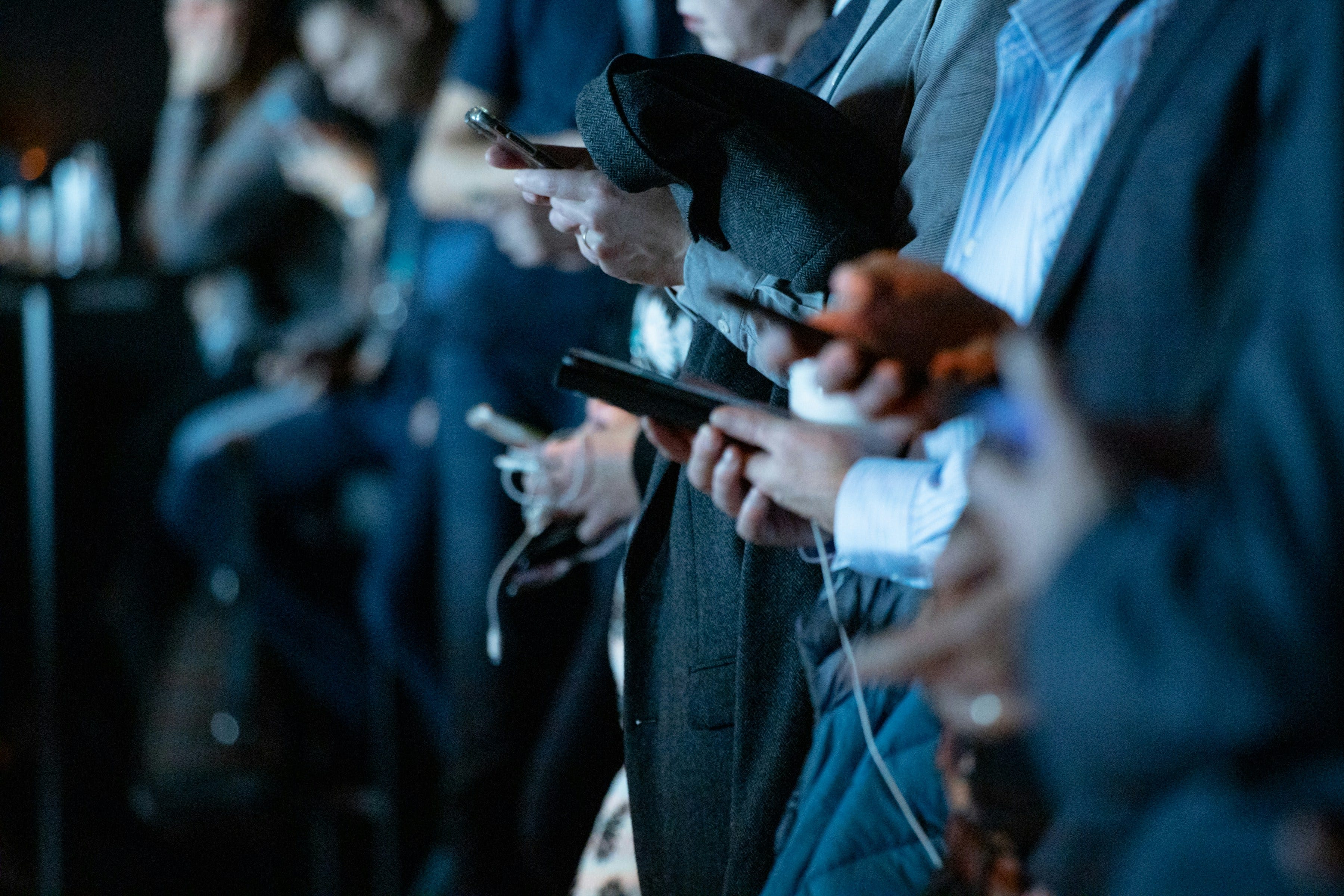
When’s the last time someone asked you for directions?
That’s the question I asked myself several years ago. I was sitting outside a cafe, reading a book. This was (and still is, in some places in Europe) a perfectly normal human thing to do. So, too, was the other thing I was doing while reading and drinking my coffee: gazing passively at the people passing by, taking in their presences, bit of speech, and their modes of dress. In other words, “people watching,” one of those pass-times we all often did before the internet.
The reason I asked myself that question was because there was a family making quite a commotion in front of the cafe. I could feel their tension and frustration quite clearly, even before I let my attention drift to their words. They were Americans, speaking west coast English, and they were quite clearly lost.
The father of the family looked particularly flustered, because his wife kept giving him the kinds of glances that a woman tired of her husband’s incompetence gives a man. He was staring at his phone, and she was staring at hers; likewise, their two adolescent children. Four people, four phones, and none of them could find what they were looking for.
“Can I help you find something?” I asked, shocking them.
They looked at me, then looked back at their phones, completely ignoring my offer of help.
I didn’t push the issue further, but after half of a minute and more agitation, the father finally spoke. He told me the place, explaining the map on his phone said it should be nearby but they couldn’t find it.
I laughed, and then I pointed to a restaurant just across from the cafe where I was sitting. “It’s right behind you.”
The four of them turned and looked in the direction I pointed. Then, they did something that’s stuck with me as much as the question I asked myself that day. They looked back at their phones, conferred with each other a little bit, and then walked away from both the cafe and the restaurant they’d been searching for.
I shrugged, kept reading, kept drinking my coffee. A few minutes later, though, I saw them return, phones still in their hands, and then they walked into the restaurant I’d pointed out to them.
Of course, I don’t know for certain why they left and came back. It’s certainly possible that they’d wanted to check out another restaurant before finally deciding on that one. But the way they held their phones made me conclude otherwise. I think they didn’t actually believe this was the correct restaurant, even after seeing it with their own eyes. Never mind the fellow American who’d confirmed it for them.
They needed their phones to confirm it for them instead.
I found it all quite funny and somewhat sad, but dwelt for quite a long time on the question I’d asked myself. Really, when was the last time someone had asked me for directions? I couldn’t remember. And then a much more uncomfortable question arose that made me put the entire matter out of my mind: when was the last time I had asked someone for directions?
I didn’t want to think about it back then, because I already knew it had been quite some time. But the question came back to me again later when I was with visiting a friend in another city. I’d offered to take him out to dinner if he’d kindly pick the place for us to eat. My offer had provoked quite a crisis, though: it took him hours to decide on a place, because no nearby restaurants had adequately-positive Yelp reviews.
“I don’t care about the reviews,” I’d told him. “I just want to buy us dinner.”
I really didn’t care, and I tried hard to convince him of this. Eventually, noticing how he’d become frozen by indecision, I just picked a place for us, but I could tell how uncomfortable he was by my willingness to just throw our fate to chance like that. And though we’d had a perfectly fine meal, I think he still wasn’t convinced it had been a good idea to just pick a restaurant without previous assurance from his phone that it would be good.
I can look back on my own life, especially the last fifteen years of it, and find therein countless stories illustrating the same problem these examples point to. I’m sure you could, too, no matter your age or relationship to technology.
We’ve been losing crucial aspects of our capacity for autonomous thought to the “automation” of machines. Put that way, it sounds quite dire, but we don’t experience it quite that way in daily life. Instead, it’s a slow progression, like the melt of a glacier or the slow collapse of an abandoned house. Bit by tiny bit, we give over crucial parts of our decision-making processes to machines, letting search engines, apps, and personalized algorithms incrementally direct our actions.
At such a slow pace, it feels more like “convenience” to us, not self-abasement, and thus it becomes quite difficult to see how much of ourselves we’re losing.
Stories are the only way we can really understand what’s been lost, so here’s another one. When I was 17 and applying to a college in Massachusetts, I stayed for a week with my grandparents. My grandfather drove me to that interview, and then, to my complete shock, he handed me some money and said, “We’ll see you at home.”
They lived in Connecticut, and the college was in a small town north of Boston. He knew I’d never taken a train before and that I had never been to Boston. I had only their address and phone number, plus the small but adequate amount of money my grandfather had given me.
I had no map, no train timetables, and absolutely no fucking idea how to do any of this.
The more I think on it, the more I’m convinced that this was the greatest gift my grandfather ever gave me. When there’s no machine in your pocket to consult about a decision or to tell you where you are, you have to find other ways of figuring those things out. You also have to trust yourself and also the general goodness of others. You have to trust that you’ll figure things out, and you have to trust that other people might know better than you do. You then have to ask those people, strangers who knew things you don’t know, like how to get to the train station or even how to buy a train ticket.
Now, of course, a 17 year old in the same situation would probably just consult his phone, asking an AI “assistant” fragments of questions like “how to buy a train ticket,” “get ticket Boston Hartford,” and “where to eat Boston train station.”
And that’s why I think it’s much harder for those younger than I am to see what they’ve lost, because they didn’t get as much experience trusting themselves and the world as I did. That’s also, probably, why we see so many studies reporting absurdly high levels of crippling social anxiety in so-called “Generation Z” teenagers and adults. Reliance on smartphones and the internet for information has alienated them from their own and others’ humanity, particularly our faculty for knowledge about the world through our in-person social interactions.
You only learn how to interact with people by interacting with people. When the majority (or in some cases the totality) of all your social exchanges occur through the mediation of a machine, of course you’ll fucking feel awkward and anxious when you’re thrust into physical contact with others.
But that awkwardness and anxiety are a necessary step in learning how not to be awkward and anxious. It’s the initial crisis we all face as we learn to be social: no one’s born knowing how to interact with other people.
The problem for younger people now is that there’s no one telling them this, no one coaxing or coercing them into these initiatory rituals. And worst of all, they’ve come to believe that their condition is physical and medical. They get diagnosed (or self-diagnose) with social anxiety, or autism, or ADHD, and thus the very conditions which have led to their alienation from themselves and each other become situations which must be sustained. Things must be kept calm, unpredictable situations and awkward social interactions must be avoided, strange and unfamiliar people and experiences must be kept far away. Everything must be known beforehand, safety and certainty confirmed by a “reliable” automated source.
They’re not the only ones suffering in this way, of course. And in their defense, they were born into a world where the adults they trusted should have known better. Those adults still should know better, but too many of us have been losing our own autonomy in favor of security and safety. I’ve met quite a few people who’ve become addicted to consulting an LLM like ChatGPT or Grok before making a decision about something, or worse, those who use these machines to check if their ideas about a matter are correct. I know very few people who drive without GPS in their cars, and fewer still who’d even consider leaving their house without their phone.
None of this is terminal, though, neither for those of us old enough to have learned better nor for those too young to have experienced the world before algorithms. And though not everyone was fortunate enough to have a grandfather engineer such a brilliant initiation as mine did, we can always still do this for ourselves, our children, and each other.
That is, we can still get lost. We can still lose ourselves in order get back what we’ve been losing.
It’s really simple when you think of it: just go somewhere unfamiliar without your phone or any other device to consult. Then, if you really get lost, ask someone around you for help. If you’re feeling really daring, ask them to help you without them looking at their phones, either.
If you live in a place you know too well to get lost in, then just leave your phone at home and go somewhere you don’t normally go. Bring a book, maybe, but make sure you’re also letting yourself people watch, opening your awareness to what else is happening around you rather than shutting it all out.
Maybe you’ll meet a new friend. Maybe you’ll even meet some parts of yourself you lost, and you can then find your way home together again.
Even though I've always gone out of my way to use actual navigation skills, a few years ago I was in Paris, trying to figure out which way I needed to walk to get from Point A to B, and as I pulled out my phone I had a revelation: I don't need Google Maps. I only need a compass. For the most part, what primarily trips me up is the direction I'm supposed to be going, because spokes. Thanks, Napoleon.
And so I bought one. And every time I've gone to Paris since then, I only use my compass and a small laminated paper map that folds down to the size of a credit card. And the looks that I get on the street are fucking WILD, yo. People will rush up to me with their phone in hand asking if they can help, and are taken aback when I tell them that I prefer to use my actual navigation skills. If I'm feeling extra spicy, I point out to them that studies have shown that reliance on GPS technology affects our working memory and navigation skills in the long-term. It's making us dumber.
Related, damn you this is the second time in a week that you've written about something that I've also been working on. Great minds think alike I guess, lucky for me I guess at my speed I won't have my version of this finished for a month or two and given the lack of the average person's working memory thanks to GPS and AI it will hopefully seem like a new topic...
Hear hear! One my greatest pleasures and adventures over the last year has been discovering a new city (Bordeaux - I don't live there, but I work there, and often spend a night or two a week)... I have quietly forbidden myself from using my phone to navigate the streets. Instead, I wander. I engage in a Situationniste Dérive; I follow the secret signs and symbols of the streets, working on vibes and codes only legible to myself, if that. I discover. I try to aim for a certain neighborhood, then zig-zag my way through whichever zones feel congenial, or spooky, or dense with meaning and desire.
Little by little, I have created a map in my mind, of idiosyncratic landmarks, places I've been with particular people, places I've stumbled upon some given night. The city is not that big, and there's a huge river all along one side. I navigate by the position of the sun, or the highest church spires, the architectural feel of certain neighbourhoods. I still keep finding myself, astonished, in the place where I once was.
These adventures mean more to me than I can say, and I would be denied them if it weren't for my refusal to by guided by any voices but those of the streets and of my heart.