

Self-Rule
On the soul and Le Guin's "The Day Before the Revolution"

We cannot control or change what it is to be human, but we can definitely choose what parts of our humanity we’d like to cultivate.
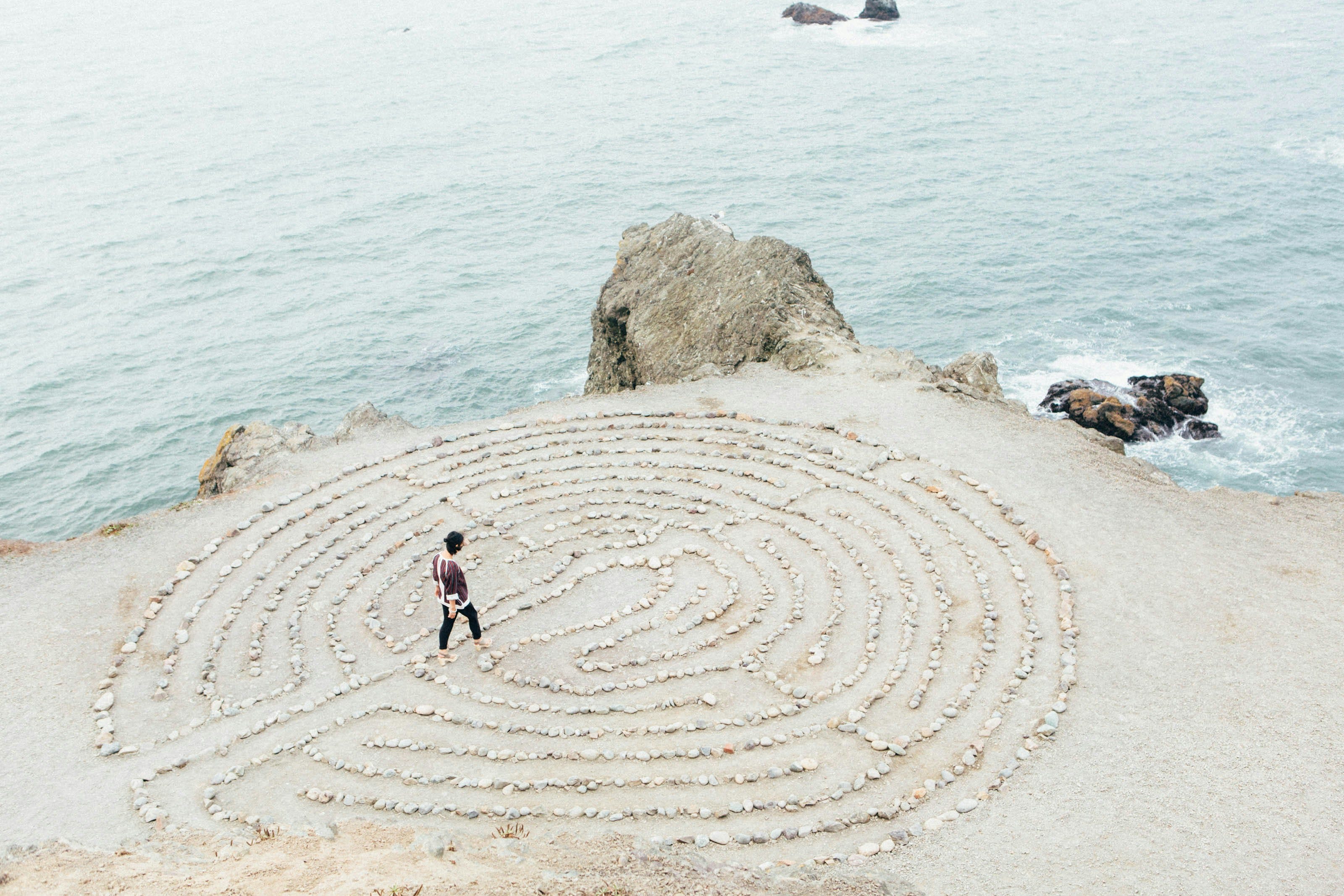
One of my favorite short stories from Ursula K. Le Guin was written as a later prologue for her novel, The Dispossessed. That novel, subtitled “An Ambiguous Utopia,” tells the story of Shevek, a scientist living on a moon colony (Anarres) founded by anarchists. Having discovered a means of instant, interstellar communication, he must travel first back to the home planet in order to pass it on to the rest of the worlds.
Anyone who’s spent much time with anarchists can already imagine the problems Le Guin aptly describes in the revolutionary society of the book. Sure, there’s more freedom and less exploitation on Anarres. However, despite being founded as an escape from an oppressive and brutal regime on the home planet, the main character’s individuality and autonomous thinking are seen as threats to many, and the anarchists are just as mobbish and brutal as the police and military they supposedly escaped. Even in the opening scene, this becomes clear: as Shevek is escorted to the ship that will take him to the home planet, an angry mob hurls rocks at him and kills someone escorting him to the ship.
Despite all the many problems of that society, it still seemed a better kind of place to live than the hyper-capitalist society to which Shevek must return. But still, the subtitle is a true one: the benefits of the anarchist utopia that was built upon the ideas of Odo, its revolutionary founder, were quite ambiguous.
The short story I mentioned is about that founder, Odo. As the title, “The Day Before the Revolution,”1 suggests, it takes place on the day just before the revolution on the home planet begins. Also, it’s her last day alive.
Odo, or Laia as she’s known before the revolution, doesn’t live long enough to see the revolution she fought so hard to manifest, and that’s both unfortunate and also fortunate. Already, she’d seen her ideas ossify into a kind of unthinking orthodoxy, a desperation to have a codified set of revolutionary principles practically handed down to the masses on stone tablets. Le Guin writes of young students visiting Laia to hear her wisdom as if she’s their prophet, even nodding like mindless sycophants when she scolds them to “Think for yourselves.”
The part that’s always struck me the most in that story is a short scene during which she sits down, exhausted and full of memories, near an open market full of “half-paralyzed alcoholics, addicts, cripples, hucksters, and fifth-rate whores, pawnshops, gambling dens, fortune-tellers, body-sculptors, and cheap hotels.”
She had never feared or despised the city. It was her country. There would not be slums like this, if the Revolution prevailed. But there would be misery. There would always be misery, waste, cruelty. She had never pretended to be changing the human condition, to be Mama taking tragedy away from the children so they won’t hurt themselves. Anything but. So long as people were free to choose, if they chose to drink flybane and live in sewers, it was their business. Just so long as it wasn’t the business of Business, the source of profit and the means of power for other people.
That point, that no revolution could possibly change the underlying human condition, is one I doubt many would-be revolutionaries would concede. After all, the vast majority of current political talk labeled “leftist” is quite quick to deny that there’s any such thing. Usually, it’s argued that the violence, self-destruction, greed, abuse, and exploitation that we see in society are caused by society and its “invisible systems.” As their argument goes, if we dismantle those systems (authority, patriarchy, white supremacy, capitalism, etc), we’d all return to some halcyon or Edenic state.
There’s always been something almost amusingly ironic about this modern, “secular” way of looking at human nature. As the official histories go, “the Enlightenment” or the “Age of Reason” (upon which this view is founded) unshackled us from superstitious beliefs that spirits and God(s) influenced our actions and shaped our societies. But all that’s really changed between that supposedly dark past and our supposedly enlightened present is that we’ve changed the names for the unseen forces that influence our actions.
Consider the recent revelations about the internet “rape academy” hosted through a pornography site. At an earlier time, we might have said such a glorification of abuse was inspired by diabolic or demonic forces. Now, it’s labeled “patriarchy,” or “rape culture,” or all manner of other names attempting to describe something that feels quite inhuman.
The problem is that such things are very, very human. Humans do things like this, and also much worse. But also, humans do amazing and kind and beautiful things, too. In fact, it’s fair (and I think true) to say that anything a human has done is therefore something that is in our “nature” to do, though by nature I also mean “capacity.”
The same could be said of other things which have our attention recently. The atrocious violence that Hamas did in Israel was a human thing to do. The atrocious violence that the IDF did and does in Gaza is also a human thing to do. Neither side can claim the other is acting in an inhuman way; on the contrary, it’s human nature all around.
But it’s also human nature to try to stop that cycle of violence, and there are plenty of humans on all sides also doing that. And also, it’s very, very human to just try to survive while others around you are killing each other, or to just look after yourself, or to escape, or to ignore it. Again, if humans do it, than it’s part of our humanity.
That’s what I’ve always loved about the position of Le Guin’s character. There’s no pristine, innocent humanity to return to, because such a thing never existed in the first place. Misery, cruelty, waste, wanton violence and self-destruction, rape, and just generally being shitty to each other is something humans do, and any attempt to eradicate those parts of our humanity will always fail.
But also: those aren’t the only things that humans do. We don’t just compete, we also co-operate. We don’t just kill and harm, we give birth to life and nourish it. We don’t just destroy, we also create. Everything a human has done and everything a human might do is contained within each of us and is constantly within our grasp.
We cannot control or change what it is to be human, but we can definitely choose what parts of our humanity we’d like to cultivate. And that’s the part, “choosing,” which is really the hardest. Elsewhere in the story, Laia/Odo, says aloud to an empty room: