

The Footbridge
(something not about the war)

Gods don’t fit through spillways; also, they have a habit of crashing through floodgates. Gods are much more like the rivers and seas we fear and want to control and thus try to dam up.
You’ll no doubt by now have noticed that the absolutely insane war going on has been a recurring theme in my writing over the last month. This won’t be about the war, though. In fact, I never really wanted to write about it; each time, I’d tell myself to look away, to write about something deeper, more life-affirming, but suddenly I’d be writing about the fucking war instead.
If you don’t write, you maybe might find it surprising that writers don’t really get as much of a say over what they’re going to write as you’d think. Or, maybe some writers do, perhaps better writers than me, or writers with much more discipline and better boundaries between themselves and the world around them.
On this, I think of the tarot suit of cups, which are all about the exchange and flow of deep currents we cannot so easily channel. Dam a river and you flood the lands above the dam, drowning out the life of land under that rising whelm. Writers who get to choose what they write about have dams with better spillways and levies with better-managed floodgates than I, perhaps.
Speaking of rivers, this filled me with so much joy a few days ago that I couldn’t stop giggling like a young boy:
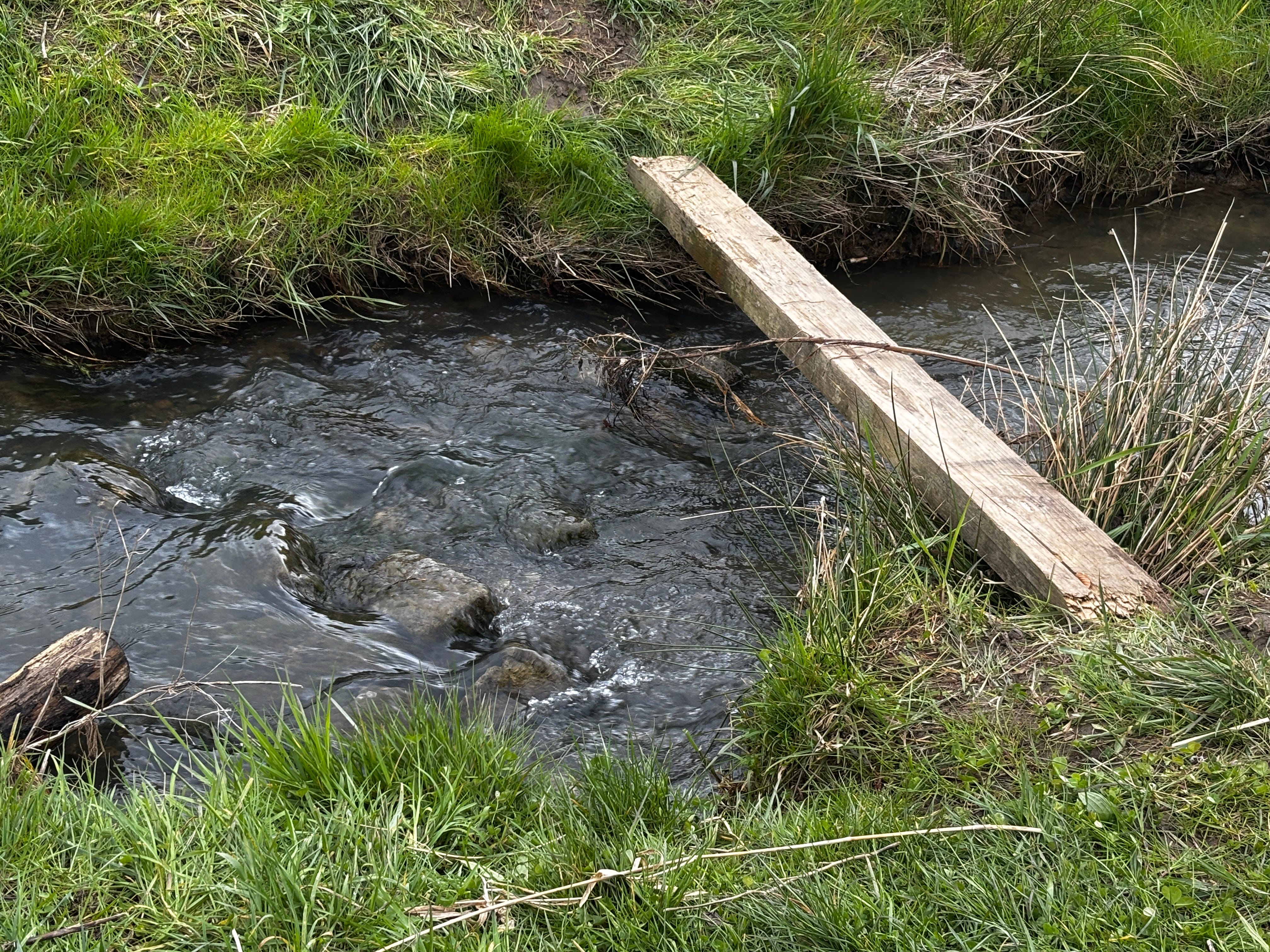
The photo was taken just a few days ago as I sat in my usual place by a section of a river called the Schwaarz Iernz, the “Black Ernz.” The river runs through the commercial and industrial zone of the village where my gym is, and much of that stretch is shunted underground to make room for the wastes of asphalt and concrete hosting capitalist commerce. However, part of it is allowed to run free through a section of new townhouses, an area which represents maybe the only real sense of community in a village (well, an entire country, really) otherwise characterized by alienation and automobiles.
For years, I’ve cried, and laughed, and dreamt, and sighed, but mostly laughed and laughed at the very spot I’ve photographed. There’s a spirit there, a nymph if you will, and I say “hello” aloud to it every time I pass that very spot, twice a day if it’s a gym day, so often at least ten times a week.
The townhouses along which it runs are full of children. Luxembourg isn’t a kind place for kids: not much for them to do, and so much economic pressure on would-be parents that children don’t really happen here. Thus, the many children in those townhouses feel almost like a “fuck you” to the anti-natalist policies of the government that would rather bring in temporary workers for a few years to pay into social security coffers and then leave (50% of us foreigners flee with five years, according to a government study) before benefiting from those funds or having children who might.
Or, as I told my husband and then some friends the other day, “Luxembourg is expensive and lonely by design.”
But despite that design, some people still have kids and try to hang on here anyway, and good on them. And some of them live with their children in those tiny townhouses by the stream, and a few of those children have noticed the river spirit, too.
There are plenty of other places, more stable, narrower, and more rationally obvious to have placed a wooden plank down as a makeshift bridge. This place, though, is exactly where I’d put something if I wanted to draw people’s attention to the spirit living there. But I didn’t place that makeshift footbridge there, some children did, and I couldn’t stop laughing when I saw it.
In fact, for quite some time, I’ve been trying to decide what I should do for that place and the spirit who lives there.
Silly me.
I often get frustrated by what passes for animism these days, what I’ve referred to in private conversations with friends as “animism without the spirits.” No, no need to name the writers I mean; you’ve no doubt encountered their rather fragile strands of wisdom to already have your own list in mind. In all cases, even as they seek to remove the human from the center of sacred narrative, they just cannot let themselves believe in the unseen things they feel.
A good counter to these strands is, of course, Mark Nemglan’s Otherwold. In writing about a river he visited on the Spring Equinox, he ends with precisely the antidote needed for this agent-less animism:
Did I come here of my own volition, or did she call me, on this spring equinox?
After all, I’m just a momentary articulation within her field; a temporary emergence within a much longer process. And she is the process.
We do not enter the otherworld but, rather, the otherworld enters us, when we give it licence (and sometimes when we don’t.)
Children have it much easier than we adults do, of course. The kids who played by that specific place at the stream heard its spirit calling much louder than I did, and they did something for it without worry or rationalization or concern for what was the best way to fulfill its wish.
They just acted; while I, despite all my active attention to the spirits of this land, tarried for over a year with questions of the right course of action.
But there’s no reason to be hard on myself for this, and I’m not. As I said, I couldn’t stop laughing when I saw that plank and thinking of the kids’ unquestioning acceptance and eager provisions of what was needed there. I could have acted sooner, but I was too caught up in trying to make sure the action was correct.
They, on the other hand, got it right the first time. Whether they know why or how doesn’t matter, anymore than it matters who finally acted. The spirit got what it wanted.
There’s also a god kicking around in this all, a reality even more incomprehensible to the kind of animism-without-spirits of which I tire but rarely confront. Gods don’t fit through spillways; also, they have a habit of crashing through floodgates. Gods are much more like the rivers and seas we fear and want to control and thus try to dam up.
The specific god here is one the Treverii, the Celtic tribe of this land, knew by Ritona, the lady of the crossings. Her name bears the same root that became the Welsh word for “ford,” the same word that became my name in a dream twenty-six years ago. Encountering her made being here, a brutally lonely and expensive place worth loving anyway for what it could be instead. There are hidden ways across, footpaths through torrents of strong waters rushing eventually to the sea, and there are spirits playing by those crossings, inviting us to cross.
And so my laughter at that footbridge increases. Gods persist in secret, hilarious, and joyful ways, congregating with and singing through the spirits, and the children who play with them, both of whom know them better than we ever might.
So, sure: there’s a war on. But there’s also a footbridge laid by children at a crossing of a stream that wanted that footbridge. And there’s a spirit and a god there, and also, often, a silly man who too often worries about doing the right thing instead of remembering to listen to what’s being asked for.
There may be no one animist who is alike, but you know one when you see one.
I tried to introduce a bog spirit to a Wiccan two decades ago. Reminding them that this was an old friend who was quite shy. I am not sure they wanted to see that being in a relationship with spirits means you are in a relationship with spirits. It took some time for them to finally meet them.
Balm for the soul. Thank you.