

The kids aren't alright
Sex, sexlessness, and the lockdown generation

We put millions of kids — boys and girls both — into situations where only the virtual simulations of social and physical interactions were allowed. They were not allowed to see their friends or be in physical spaces with their peers where they could flirt or fight or even touch each other. Instead, though, they could scroll TikTok and Instagram, where they were passive observers of virtual identities. And when their parents weren’t looking (and let’s be honest, parents rarely ever are), they could watch live streams and recordings of people having every kind of sex imaginable.
And sure, the lockdowns eventually lifted, and life could return. But I think we also intuitively understand that life actually didn’t return; that, as the LA Times put it, there was a “failure to launch” for many of those kids who, now adults, don’t yet understand what the fuck was done to them

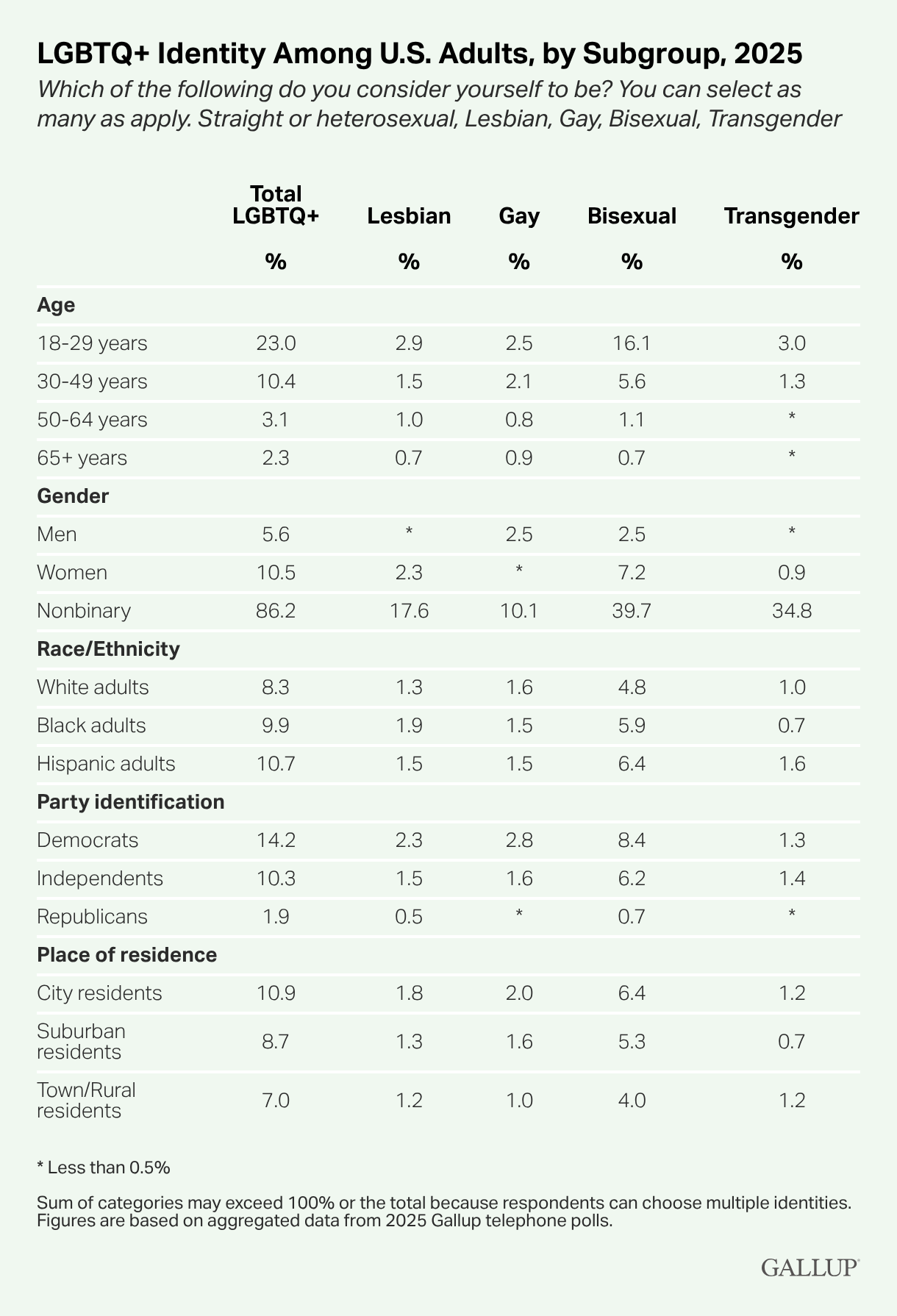
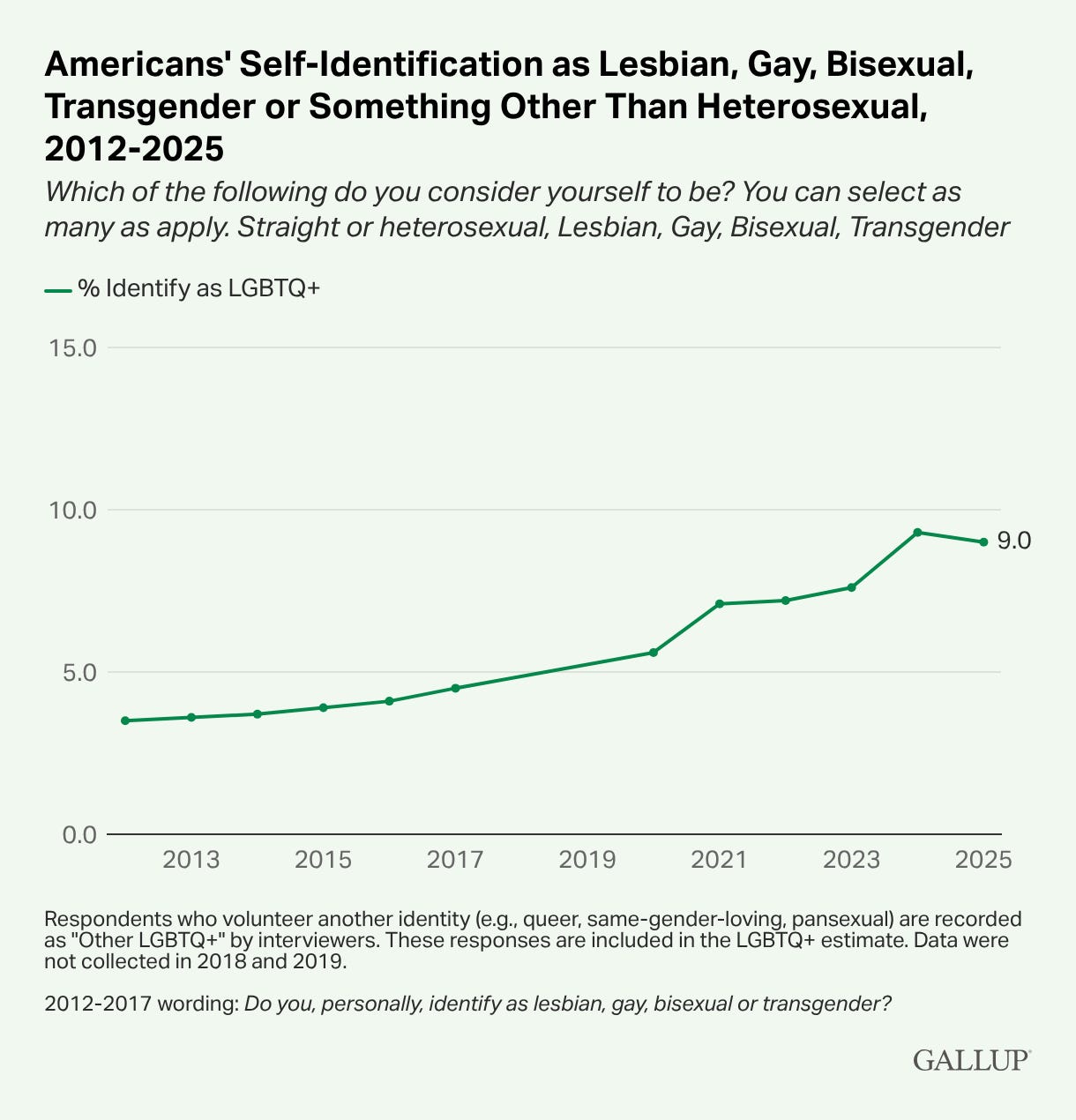
Perhaps you’ve already seen the Gallup report1 on sexual and gender self-identification in the United States? According to it, 9% of all Americans identify with one of the many subcategories of the “LGBTQ+” catch-all, while 23% percent of adults 19-29 do.
Statistical polling is a funny thing, of course. Polling organizations contact a small number of people, collect their answers, and then apply statistical formulas to those responses in order to make those people represent vastly larger groups. In this case, Gallup asked only 13,0002 adults how they identified, along with their age, sex, and sexual identity, and then, through the magic of statistics, made those answers represent 279 million adults.
There are some weird conclusions in their statistics that are certain to cause celebration by some and panicked fear by others. Specifically strange is how these identifications are spread out across age groups. For instance, that 23% percent figure for 19-29 year olds is more than twice that of the next age cohort (30-49 year olds) who report at 10.4%.
Weirder still are the figures showing massive increases in these numbers since the first year Gallup began collecting this information. In 2012, 3.5% identified with these categories. That percentage slowly rose for the next seven years but then rose much faster (including two large jumps, in 2020 and 2024) before starting to come back down again.
Now, if you assume the figures are an accurate accounting of the situation in the United States — and there are plenty of reasons not to assume this — then you might start to wonder why there’s such an increase and then try to come up with some theories as to what’s happening.
That’s especially because of the current model of sexuality that most of us accept, which is that sexual desire isn’t considered a choice but rather a hard-wired biological fact (“born this way”). In such a framework, we’d expect to see such numbers stay relatively constant every year, rather than suddenly jump.
When they do jump, then, you need a different explanation. The one you’re most likely to see is that greater societal acceptance means more people feel comfortable telling the truth about themselves. School programs to increase awareness and tolerance of variant sexual identities and a programmatic push through media and government to encourage societal openness: most progressives and conservatives would agree these explain this (but disagree on whether this is necessarily a good thing).
But there’s something else — and much bigger — going on.